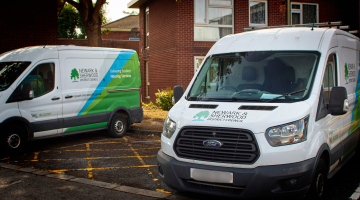
Council tenants are set to benefit from a significant expansion of the housing repairs service, with 13 additional permanent posts being created across repairs, empty homes, works planning and customer services.
This major expansion of the District Council’s Housing Repairs and Empty Homes team will improve repair times, strengthen support for tenants and bring vacant council homes back into use more quickly.
The investment will increase the Council’s in-house capacity by an estimated 30 to 40 repair appointments a day - equivalent to between an estimated 7,500 and 10,000 additional repair activities each year. It would also reduce use of agency workers and external contractors for core repair activity, while improving service resilience and communication with residents.
Councillor Lee Brazier, Portfolio Holder for Housing at Newark and Sherwood District Council, said:
This is fantastic news for our tenants, who deserve a repairs service that is responsive, reliable and keeps them informed. We will now have additional capacity and specialist support to complete more repairs, respond effectively to emergency repairs and return empty homes to residents sooner.
By investing in permanent, in-house expertise, we can build a more resilient service, reduce use of temporary arrangements and deliver a better quality of service and experience for tenants.
The Council is looking to recruit to these roles in the coming months adding eight additional operatives, a repairs and voids supervisor, a damp and mould and disrepair surveyor, a works planning supervisor and two customer service repairs advisers.
The District Council currently completes around 23,000 repair activities a year - approximately 100 each working day. Demand has grown as the service responds to stronger regulatory requirements and more complex cases involving damp and mould and building safety requirements.
The extra resources would support faster inspections, earlier identification of required work and improved coordination of labour and materials.
Councillor Lee Brazier continued:
By acting now, we can improve the repairs service for tenants while building a more efficient, cost effective and self-sufficient service.”
Feedback from tenants and the recent visit by the Regulator of Social Housing have reinforced that repairs are a priority, and we are committed to improving our service.
To evaluate the success of the additional resource, the District Council expects to see improvements in repairs performance, empty homes turnaround times, customer communication, service resilience and a reduction in use of temporary arrangements.
At the District Council meeting on Tuesday 13 October, Cabinet approved the improvements and a £527,920 budget for 2026/27, including the capital cost of the additional vans required. The costs will look to be covered through efficiency savings, lower contractor spending and the Council’s usual budget-setting process.